
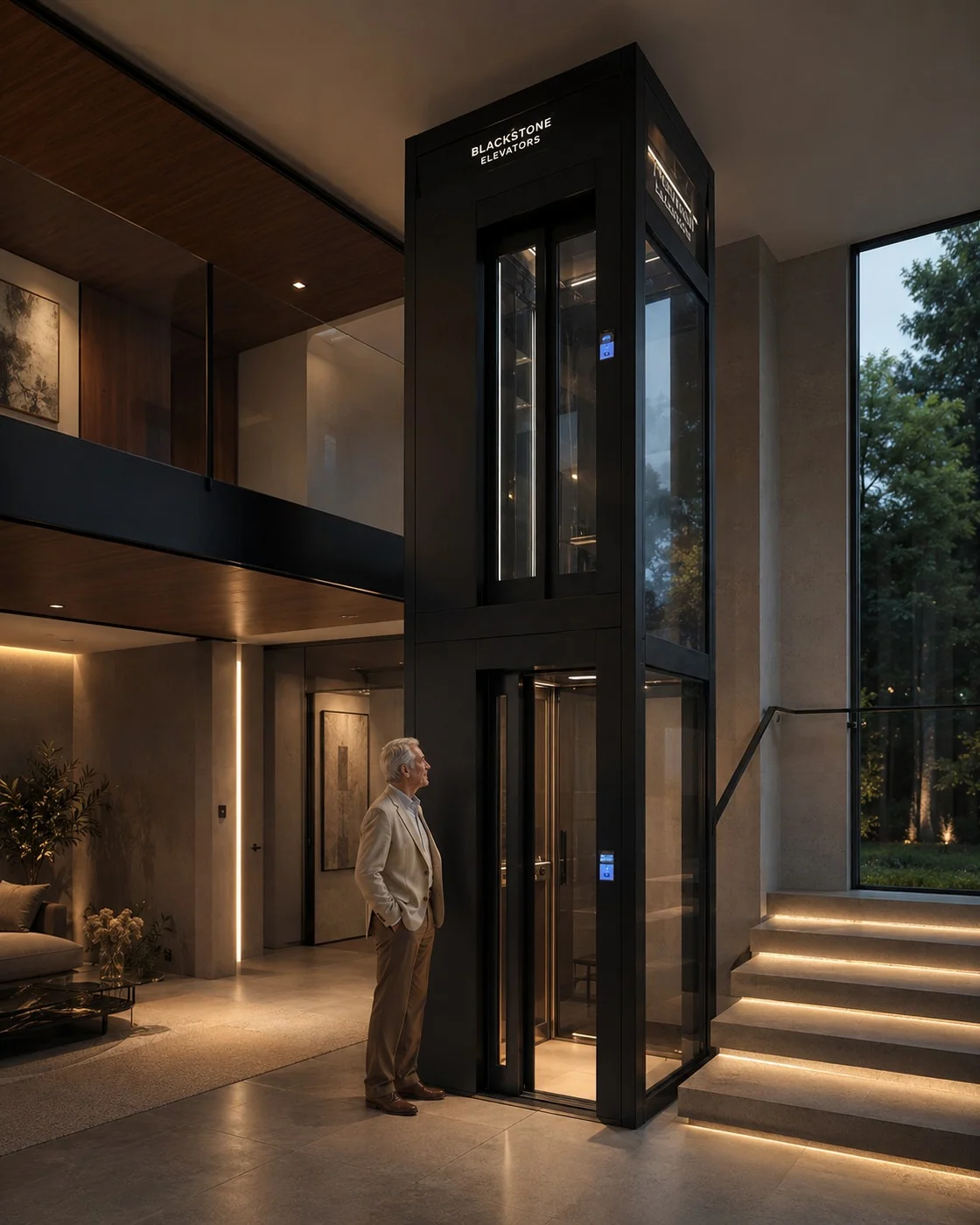
A hydraulic home elevator uses a pump and hydraulic fluid to raise the cabin. A traction home elevator uses a motor and a counterweight. For a Bangalore villa or duplex, the right choice depends on the space available at each floor, whether the house is already built, and how often the lift will be used.
How hydraulic and traction home elevators work
Hydraulic elevators. A pump moves oil into a cylinder to push the cabin upwards. During descent, the system controls the return of the oil to the reservoir to lower the cabin.
Traction elevators. The motor turns a sheave that moves the suspension ropes or belts, with a counterweight travelling in the opposite direction to the cabin. A gearless drive turns the sheave without a separate gearbox. In a machine-room-less (MRL) arrangement, the machine can fit within the shaft. Otis guide to lift drives
Hydraulic vs gearless traction for Bangalore homes
Use this table to compare the actual equipment and installation scope in each proposal. Ask for the exact dimensions and specifications in writing.
| Factor | Hydraulic | Gearless traction |
|---|---|---|
| Equipment space | Allow for the cylinder, pump and oil reservoir. Ask where the power unit will sit and how it will be accessed. | Allow for the machine, counterweight and controls. A machine-room-less layout locates the machine in the shaft. |
| Pit and headroom | Ask for the proposed model’s required space below the lowest landing and above the top landing. | Check the same dimensions against the proposed shaft drawing, including space for the machine and counterweight. |
| Upfront cost | Compare the full quote, including equipment, shaft or structure, installation and site preparation. | Compare the quote on the same floors, cabin size, doors and scope of work. |
| Energy use | The pump uses power to raise the cabin. Ask for operating and standby consumption. | A counterweight balances part of the load. Ask for operating and standby figures for the quoted lift. |
| Speed and ride | Compare the rated speed and ask to try a lift with a similar layout and travel distance. | Check the quoted speed and how the lift starts, stops and levels at each landing. |
| Power-cut rescue | Ask what the specified rescue system does during a power cut and who handles assisted rescue. | Ask what the proposed Automatic Rescue Device powers, where the lift stops and what happens if backup power is unavailable. |
| Maintenance | Ask how the oil, seals, valves and pump are inspected and which items the service agreement covers. | Ask about servicing for the suspension components, brake and controller, and check the contract exclusions. |
What happens during a power cut?
Ask the supplier to explain how the rescue system works on the exact lift you are considering. If the quote includes an Automatic Rescue Device (ARD), confirm which functions it powers, under what conditions it can bring the cabin to a landing, and how its battery is tested and replaced. At handover, ask the installer to explain the emergency procedure and show everyone in the household how to call for help.
What changes for an existing house or a new villa?
In an existing house, start with the proposed lift entrance on every floor. Check whether a stairwell or an exterior position makes sense, what structure can support the lift and how much space is available above and below it. If there is no concrete shaft, ask if a separate steel structure is feasible. Our guide to adding a home lift to an existing Bangalore house explains what to check before choosing a position.
For a new villa, coordinate the shaft, door positions, equipment space and power provision with your architect and installer before finalising the drawings. Get each supplier to mark these requirements on a layout before you compare quotes.
How much will the lift cost to run and maintain?
Estimate the trips your household will make on a typical day. Ask suppliers for operating and standby electricity figures for the proposed lift and the conditions behind them. Use your electricity tariff to estimate running cost. Compare the warranty, maintenance charges and excluded parts alongside the installation price. The Bangalore home lift cost guide explains which building works and upgrades can change a quote.
Which Karnataka approvals should you check?
Karnataka’s lift law requires permission before a lift covered by the Act is installed and a licence before it is used. The rules list Form A1 for applying for installation permission and Form B1 for applying for the licence after installation. Ask the installer and the authorised officer to confirm the current process for your property and who will prepare the documents, arrange the inspection and pay the fees. Karnataka Lifts Act · Karnataka Lifts Rules
- Ask for the installer’s Karnataka registration details and validity.
- Ask which current BIS standards apply to the proposed configuration and what compliance documents the supplier provides.
- Get the rescue provisions, warranty and annual maintenance contract exclusions in writing.
Which home elevator fits your Bangalore property?
Compare layouts drawn for the same floors, door openings and household needs. A hydraulic proposal needs a suitable location for the power unit. A gearless traction proposal needs space for the machine and counterweight. In both cases, ask who will build the structure and how the equipment will be reached for servicing.
Blackstone supplies gearless home elevators in Bengaluru. If you’re assessing a villa, duplex or existing house, bring your drawings or a rough sketch. Explore our home elevators in Bangalore to book a free site visit and discuss the layout, power supply and quote for your property.